Textile & Fabric Restoration in North Las Vegas
Textile and fabric restoration in North Las Vegas after fire, water, and smoke damage. IICRC Certified Firm, licensed and insured, insurance billing accepted. Call (702) 633-5033.
After a fire or a water loss, the structure gets the attention first, but for most families the hardest part is the belongings: the clothing, bedding, rugs, drapery, and upholstery that carry real value and memory. It is easy to assume all of it is gone. In practice, a large share of soft goods that look ruined by smoke, soot, or water can be recovered through specialized textile restoration, and doing so is usually far less costly than replacing everything at once. Textile and fabric restoration is the part of the job that treats those items as recoverable property rather than debris.
What textile and fabric restoration actually involves
Textiles behave differently from hard surfaces after a loss. Smoke and soot are made of fine, often oily particles that work into fibers and leave both staining and odor; water and humidity add the risk of mold and dye migration if items sit wet; and different fabrics, cotton, wool, synthetics, leather, and delicates, each tolerate different cleaning methods. A shirt and an area rug and a leather jacket damaged in the same fire do not get treated the same way.
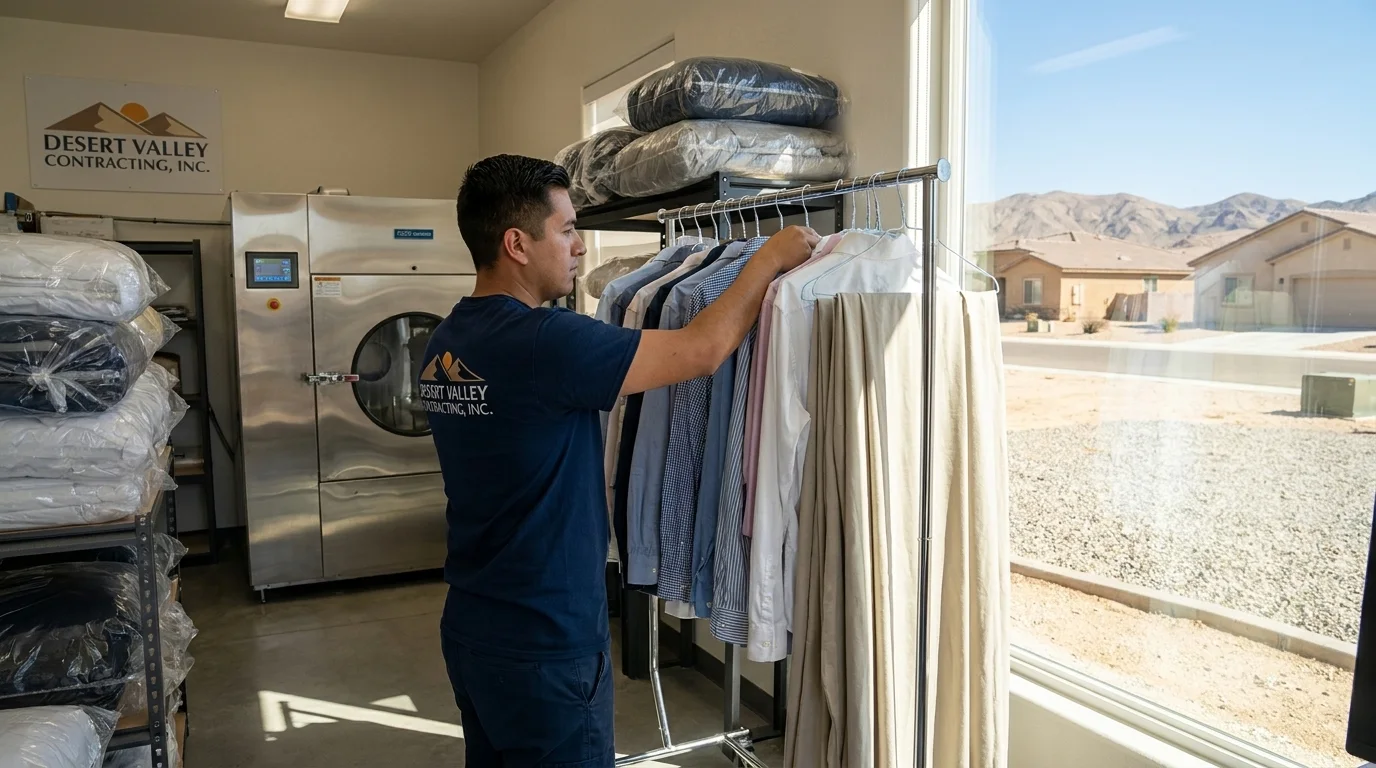
The work starts with sorting the salvageable from the non-salvageable and documenting both, because that inventory is what an insurance claim runs on. Salvageable items are cleaned with methods matched to the fabric and the contamination, wet cleaning and controlled laundering for many washables, dry or solvent methods for items that cannot take water, and specialized soft-goods cleaning for heavier soot loads. Where smell lingers after cleaning, the item is deodorized at the molecular level rather than perfumed over, using controlled methods such as ozone or hydroxyl processing. The goal throughout is recovery to a genuinely clean, wearable, usable condition, not a surface improvement that fades.
Our process
-
Assessment and inventory. Each item is examined and sorted into salvageable and non-salvageable, then photographed and logged. This documented inventory is the backbone of the insurance claim and the record of what was recovered.
-
Pack-out and tracking. Salvageable textiles are packed out and moved to a controlled cleaning environment, tracked as their own category so nothing is misplaced within a larger contents or structural restoration.
-
Fabric-matched cleaning. Items are cleaned by methods appropriate to the material and the type of contamination, so a wool rug, a cotton wardrobe, and a leather piece each get the right treatment rather than a one-size approach that can set stains or damage fibers.
-
Deodorization. Any remaining smoke or musty odor is treated at the source through controlled deodorization, and items are confirmed odor-free after airing out rather than judged on the day of cleaning.
-
Return and documentation. Recovered items are returned clean and wrapped, with an itemized record of what was treated, what was recovered, and what was assessed as non-salvageable for your claim.
What separates good textile restoration from bad
The most common failure is treating odor as a fragrance problem. Spraying a scent over smoke-contaminated fabric leaves the residue in the fibers, and the smell comes back within days. Real recovery removes the contamination first and only then deodorizes, and it verifies the result after the item has aired out.
The second is skipping the inventory. When soft goods are cleaned in bulk without an item-by-item record, homeowners lose the documentation their claim depends on, and genuinely non-salvageable items get quietly mixed in with recovered ones or, worse, salvageable items get written off by default. A photographed, itemized inventory protects both the recovery and the claim. The third is applying one cleaning method to everything; delicates, leather, and heirloom pieces need individual handling, and a blanket approach is how salvageable items become losses.
What does textile and fabric restoration cost?
Textile restoration is usually priced by volume or by item rather than as a single flat fee, and it is generally weighed against the cost of replacing the same goods new. The ranges below are typical industry figures, not Desert Valley Contracting Inc quotes.
| Scenario | Typical range |
|---|---|
| Standard washable garments (per load or volume) | Priced by volume |
| Smoke or soot recovery, per item | $5 - $30+ per item |
| Area rugs (specialty cleaning) | $3 - $8 per sq ft |
| Upholstered pieces and drapery | Priced per piece |
| Deodorization for persistent smoke odor | Added to item pricing |
Every loss and every wardrobe is different. Desert Valley Contracting Inc provides a documented inventory and a written scope before cleaning begins, so you know what is being treated and what is being recovered. When the textiles are part of a covered fire or water loss, contents coverage typically pays for the restoration subject to your deductible.
Seasonal and regional considerations
In the North Las Vegas and greater Las Vegas Valley climate, the dry desert air is an advantage for drying and airing textiles, but it does nothing to remove smoke residue or soot on its own, dry does not mean clean. After a water loss, the same dry heat can accelerate dye migration and set stains if wet items are left sitting, so getting textiles into the restoration process quickly matters. Household dust and fine grit common to the valley also load into rugs and upholstery over time, which is worth addressing during any recovery cleaning.
Service area
Desert Valley Contracting Inc is based in North Las Vegas and serves homeowners throughout the Las Vegas Valley, including Las Vegas, Henderson, Summerlin, Spring Valley, Enterprise, Paradise, Sunrise Manor, and Boulder City. As a licensed and insured IICRC Certified Firm, we handle textile and fabric restoration as part of our fire, water, and contents restoration and storage work, so your belongings are recovered under the same documented process as the rest of your claim.
If a fire or water loss has left clothing, rugs, or upholstery you assume are gone, hold off before throwing them out, more is recoverable than most people expect. Call Desert Valley Contracting Inc at (702) 633-5033 to have your textiles assessed and inventoried before anything is written off.
Services We Handle
- Textiles
Frequently Asked Questions
Can clothing and fabrics really be saved after a fire?
Does homeowners insurance cover textile and contents restoration?
How do you get smoke odor out of fabric instead of just covering it?
What happens to my belongings during textile restoration?
Looking for the best textile & fabric restoration company in North Las Vegas?
Desert Valley Contracting Inc provides licensed and insured textile & fabric restoration in North Las Vegas, NV and the surrounding area, and has served local property owners since 2000. Customers rate us 4.3 out of 5 stars across 95 Google reviews. We answer calls 24/7 — call (702) 633-5033 for immediate help.
Need Textile & Fabric Restoration now?
We respond 24/7 across North Las Vegas and surrounding NV cities.